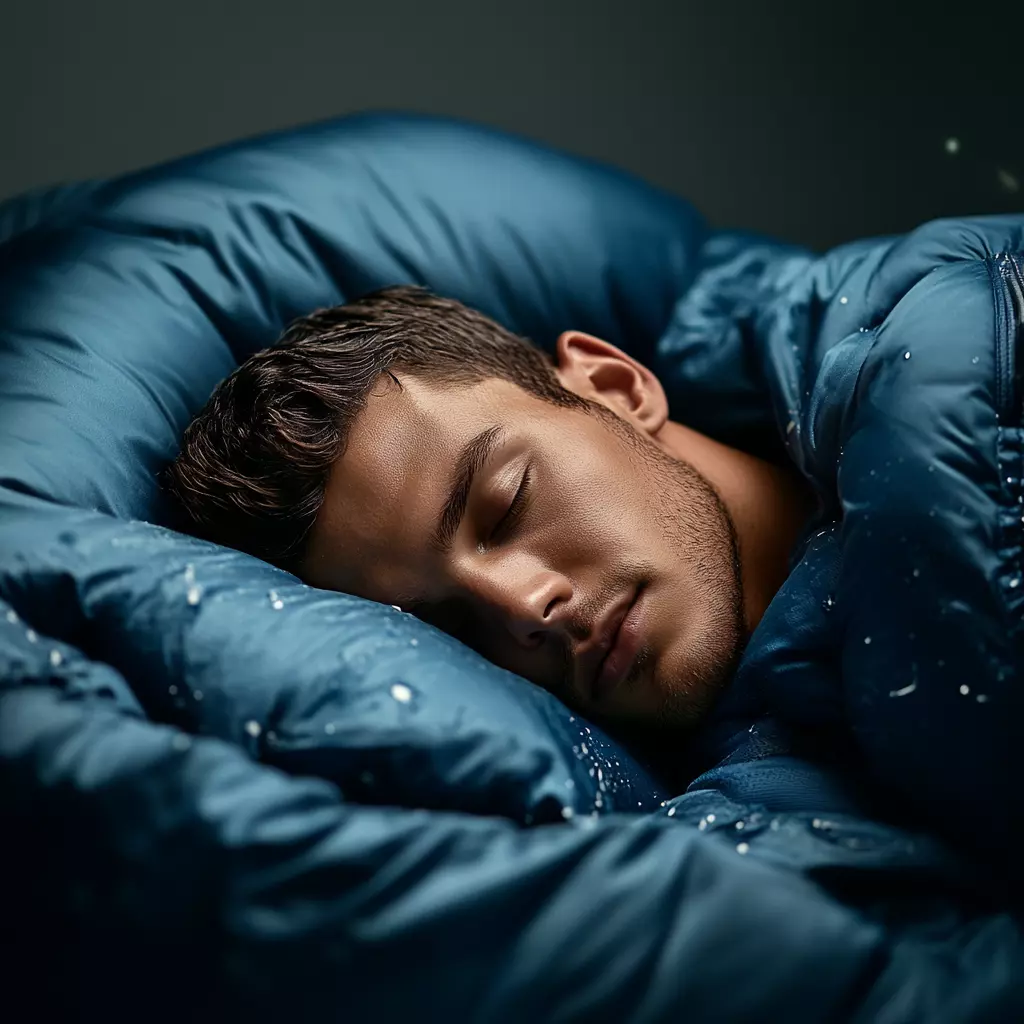
Why Sleep and Body Temperature Are Deeply Interconnected
Introduction
Across all mammals, sleep and body temperature are tightly coordinated. Sleep is most likely to occur during periods of declining core and brain temperature, and preparation for sleep often involves thermoregulatory behaviors—such as nest-building or curling up—that promote this cooling. Far from being just comforting habits, these behaviors may activate brain circuits that link warm microclimates to non-rapid eye movement (NREM) sleep onset.
This review explores the mechanisms that link thermoregulation and sleep, and highlights how neuronal circuits in the preoptic hypothalamus integrate warmth signals to initiate sleep. The research has wide implications for understanding energy homeostasis, insomnia, and even torpor and hibernation.
Key Takeaways
1. Thermoregulatory Behaviors Promote Sleep
- Mammals universally display behaviors like nesting, huddling, or curling up before sleep.
- These behaviors generate localized skin warmth, triggering vasodilation, lowering core temperature, and facilitating NREM onset.
- In humans, optimal sleep occurs when the skin microclimate is around 31–35°C, typically achieved through bedding or environmental adjustments.
2. The “Warm Bath Effect”
A warm bath or localized skin warming 1–4 hours before sleep:
- Decreases sleep latency
- Increases slow-wave (deep) NREM sleep
- Reduces REM duration
This effect occurs as body temperature peaks and then declines, aligning with circadian rhythms.
Vasodilation in hands and feet (distal skin) is a strong predictor of sleep onset.
3. Neuronal Circuits Link Warmth to Sleep
- The preoptic hypothalamus (PO) integrates sensory warmth signals to induce NREM sleep and initiate body cooling.
- Specific neurons—especially nitrergic-glutamatergic neurons expressing NOS1—are activated by skin warmth and drive both sleep and hypothermia.
- These circuits inhibit arousal centers and promote thermal efficiency, especially during early NREM stages.
4. Energy Homeostasis Is Tied to Sleep Onset
- Leptin-sensitive neurons in the PO reduce thermogenesis and food intake when warmth is detected, linking satiety, warmth, and sleep.
- The PO also receives hunger/satiety signals from AgRP and POMC neurons, connecting feeding behavior and sleep regulation.
- Sleep onset becomes more likely when energy needs are met and the body is thermally comfortable.
5. Sleep Deprivation Disrupts Thermoregulation
Rats subjected to sleep deprivation show:
- Increased metabolism and core temperature
- Progressive hypothermia and weight loss
Brown adipose tissue (BAT) thermogenesis, regulated by UCP-1, is crucial for sleep rebound and temperature regulation after deprivation.
6. Sleep, Torpor, and Hibernation Share Temperature Mechanisms
- During torpor or hibernation, EEG activity slows and may become isoelectric (flat) at core temperatures below 10°C.
- NREM sleep requires a minimum temperature (~20–25°C) to maintain EEG delta activity.
- Mammals in torpor may accumulate a sleep debt that is recovered during warming periods, suggesting sleep is sacrificed for energy conservation in extreme cold.
Why Link Body Cooling with NREM Sleep?
The coordination of brain cooling and NREM onset may serve a regulatory function:
- Slower cerebral metabolism
- Enhanced expression of cold-shock proteins like CIRP and RBM3
- Synchronization of clock gene expression via small temperature shifts
These mechanisms could help track total sleep time and optimize sleep-dependent gene transcription.
Conclusions
Sleep and thermoregulation are not merely parallel processes—they are fundamentally intertwined. The preoptic area of the hypothalamus serves as a master integrator, translating skin warmth and energy status into permissive signals for NREM sleep. These findings shed light on why behaviors like nesting, bathing, or managing room temperature can dramatically influence sleep onset.
In both animals and humans, maintaining a warm skin microclimate facilitates vasodilation, triggers sleep onset, and supports the energy-saving role of NREM sleep. Conversely, extreme cold or sleep deprivation disrupts these finely tuned mechanisms, highlighting how thermal and metabolic regulation are central to healthy sleep.
Source:
National Library of Medicine – PMC6491889 (https://pmc.ncbi.nlm.nih.gov/articles/PMC6491889/).